University of Connecticut Climate Resource Exchange

Showing posts with label drought. Show all posts

Wednesday, September 7, 2011

Hellish Conditions Persist


As of yesterday, Texas wildfires had consumed more than 700 homes and killed at least 4 people. Enabled by extended drought conditions, these fires are big enough to be seen in space.

Astronaut Ron Garan tweeted this picture of the Texas wildfires from the International Space Station.

Since December, wildfires have consumed an area of land that is approximately the size of Connecticut; the lack of containment of the blazes is being called unprecedented. And, while large amounts of rain is being dumped further east, Texas is not receiving the water it so desperately needs (see below).

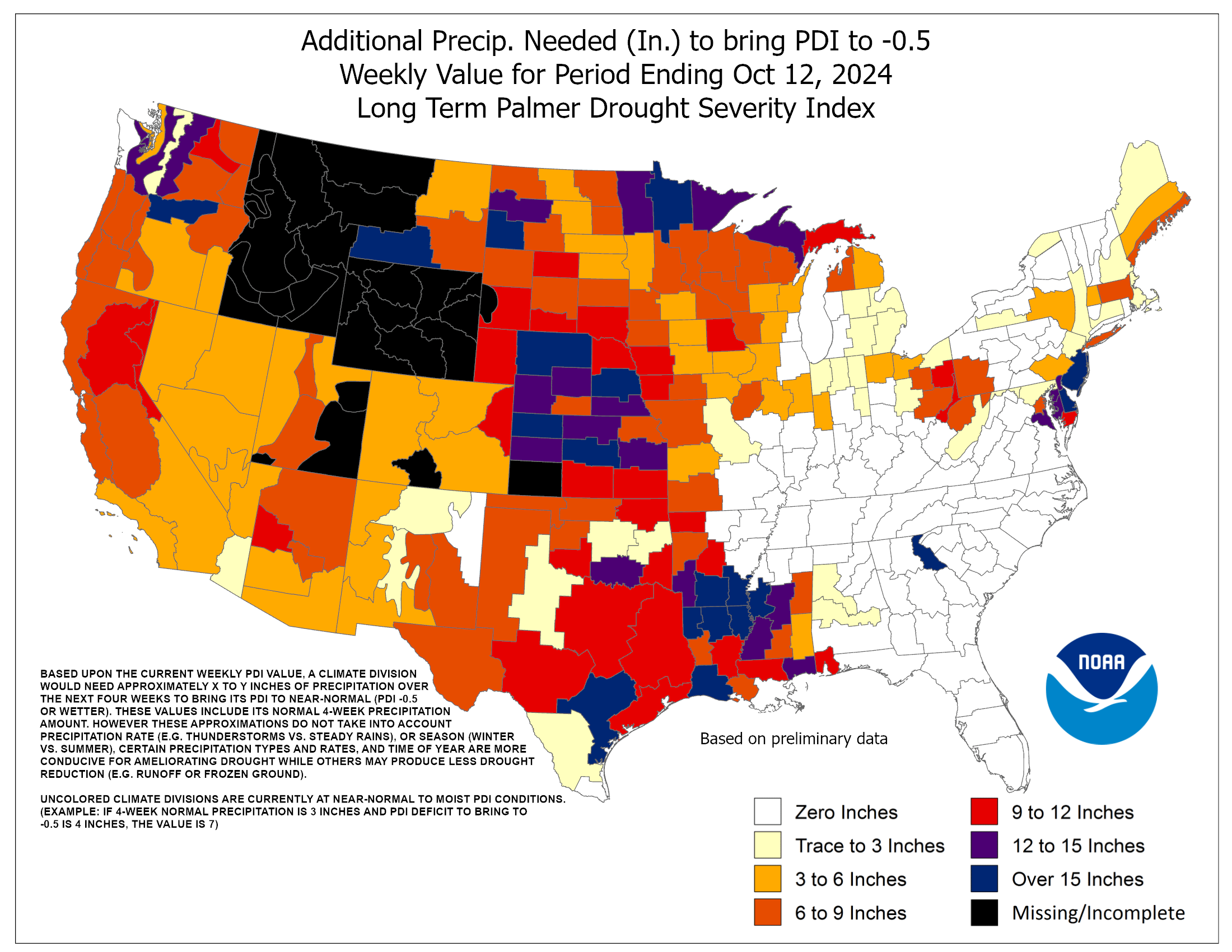
Most of Texas needs over a foot of rain to end drought conditions.

In 2011, about 6 million acres have been burned nationally; over 3 million have been in Texas. And, unfortunately, there is no end in sight to these conditions.

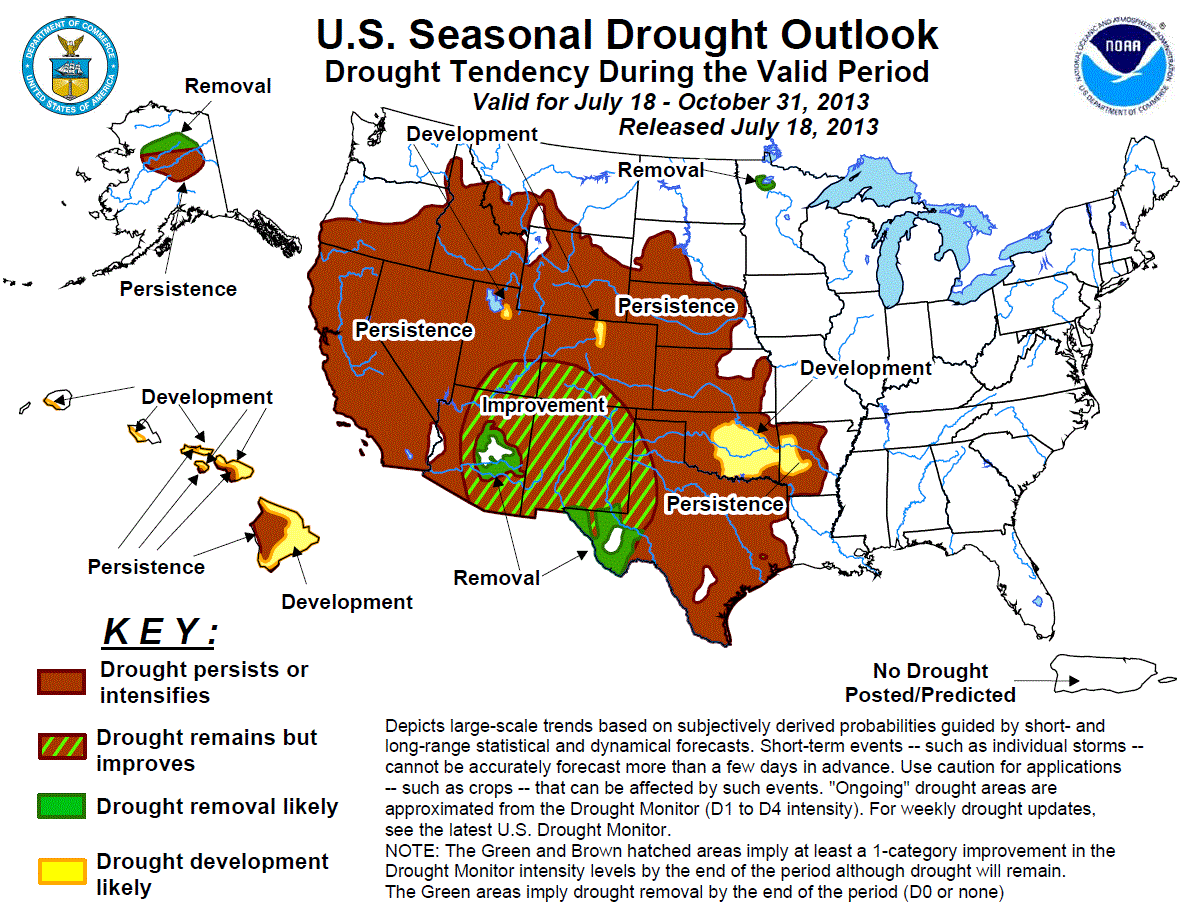
Drought conditions are expected to persist in the southwest US throughout the Fall.


Framed in the proper context, these fires can be seen as one piece of evidence of climate change. Evidence is accumulating that a changing climate is already causing extreme weather events. Moving forward in the 21st century, Texas is located in an area of the world that is projected to become more dry (see map above), which means these hellish conditions (see video below) could be a preview of a more extreme future.


Thursday, August 18, 2011

Drought in the Horn of Africa

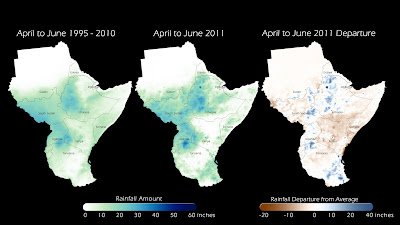
Below average rainfall in the Horn of Africa has created a humanitarian crises.

The Horn of Africa has experienced extended drought for the past decade. This year in particular, disappointing wet seasons in addition to the expected dry season have created a humanitarian crises. This NOAA page explains that the region is dependent on two rainy seasons: one in the fall and one and the spring. This past year has been especially dry, which creates a critical situation when considering the sub-Saharan summer. USAID has created a map that shows the most critically affected areas in terms of food security. This article from Plan details some of the hardships being endured by families in Kenya while this article in The Guardian discusses how the population of Djibouti is being affected. According to the latter article, up to 80% of livestock has been lost while food prices have risen 50% in Djibouti. USAID has taken action in the form of emergency assistance in the region. Although the people of the Horn of Africa are in dire need for aid now, this blog post from AlertNet makes the case for the importance of proactive measures. Risk reduction efforts ahead of time, Esther Williams writes, is incredibly cost efficient. With the projected influence of climate change, initiating adaptation in anticipation of future crises seems to be a better investment than waiting to react. This drought alone may kill up to 400,000 children due to starvation.


Wednesday, August 17, 2011

La Niña Cause of US Drought?


This article, from NewScientist, discusses two possible causes for the extended heatwave in the US: La Niña or the jet stream being stuck in one place.


Thursday, August 11, 2011

July's Extreme Heat

Vegetation anomalies in North America (July 2011)
Throughout July 2011, the United States experienced extraordinarily high temperatures and many states in the Southwest felt the effects of drought conditions. The impact of this drought on vegetation growth can be seen in the photo above. The image, from the NASA Earth Observatory, displays vegetation anomalies across North America in July. To learn about the national weather pattern that caused such extreme conditions, visit this NOAA page. The progression of the heatwave can be seen in these two NOAA Environmental Visualization Laboratory animations that show how conditions changed throughout the second half of the month: